Kitchen floors and grout
Degreasing rather than mopping, including the grout lines and the floor under and behind equipment.
Serving Saint Paul, Minnesota & surrounding areas
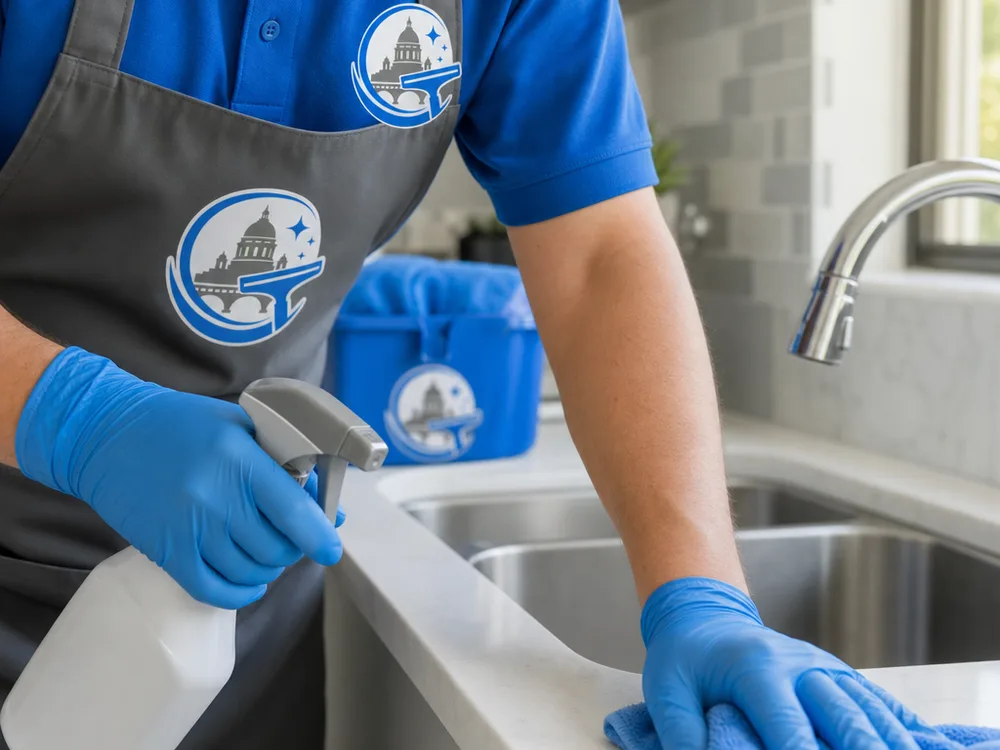
Two different jobs under one roof: the kitchen needs chemistry, the dining room needs appearance.
Back-of-house is a chemistry problem. Grease behaves nothing like ordinary soil: it builds in films on walls, hood surrounds and equipment sides, it carries into floor grout, and wiping it with the wrong product spreads it thinner rather than removing it.
Front-of-house is an appearance problem, and the standard is whatever a guest notices in the first ten seconds. Entry glass, the host area, table bases, booth seams, light fixtures and the floor edge along the wall are where diners form a judgment before they read anything on the menu.
The two need different products, different time and often different visits. Scoping them as one general clean is how kitchens end up with degreasing time spent polishing a dining room, or the reverse.
Degreasing rather than mopping, including the grout lines and the floor under and behind equipment.
Sides of ranges, prep tables, hood surrounds and wall surfaces that carry airborne grease film.
Sinks, splash zones, shelving and the wet-floor areas where buildup and slip risk sit together.
Table bases, booth seams, chair legs, window ledges and the floor edge where crumbs collect.
Guests read a restroom as the kitchen they cannot see, so fixtures, floors and dispensers get full attention.
As Saint Paul commercial cleaners, we typically build programs around recurring maintenance first, then add periodic tasks that keep the building from slipping over time.
Common inclusions in commercial cleaning Saint Paul facilities:
If you manage a multi-tenant property, we can define responsibilities by suite versus shared areas so tenants and management are aligned. If your facility has security needs, we plan around them rather than forcing a one-size schedule.
Our office is located at 139 Eva St, Suite 5, Saint Paul, MN 55107, so dispatch and supply runs stay local and practical when needs change.
A documented process keeps cleaning expectations, building access, and ongoing quality aligned.
Most kitchens release after close and most dining rooms before open. We fit the visit to your actual hours, not a generic slot.
Kitchen and dining tasks are listed separately with their own frequencies, so neither borrows the other's time.
Degreasing depth, grout work and high surfaces sit on a longer rotation rather than being attempted nightly.
If you have a checklist from an inspection or your own standards, the scope is written to match it.
Recurring commercial work in Saint Paul typically runs about $0.10 to $0.30 per square foot per visit, and smaller venues commonly land around $300 to $900 per month. Restaurants usually sit at the upper end of that for their size, because kitchen degreasing takes longer per square foot than office-type space.
Request a CallbackWe will walk the kitchen and the dining room separately.
Request a CallbackThat is the normal arrangement, and for kitchens it is usually the only one that works. We hold keys or codes under your own access process and schedule the visit so the kitchen is released and the dining room is ready before open.
We clean hood surrounds and the surfaces around them. Full hood and duct work inside the system is a certified specialty with its own inspection requirements, so that belongs with a specialist and we will say so rather than quoting it.
It helps with what cleaning controls: floors and grout, equipment surrounds, wall films, restrooms and storage order. It does not substitute for food handling practice or temperature control, and no cleaning scope should be sold as if it did.
The mop pass is nightly, but degreasing depth is a cycle. Most kitchens want a deeper treatment monthly or quarterly depending on volume and fryer use, and letting that slip is what turns grout from discoloured into a much bigger job.
Yes, and for some venues that is the sensible split: your kitchen team handles back-of-house at close and we take the guest-facing areas before open. The scope says plainly which areas are ours.
Tell us your close and open times and we will scope each side around them.
Request a quote
Send the details and we will arrange a free walkthrough, then put the scope and the figure in writing before anything starts.